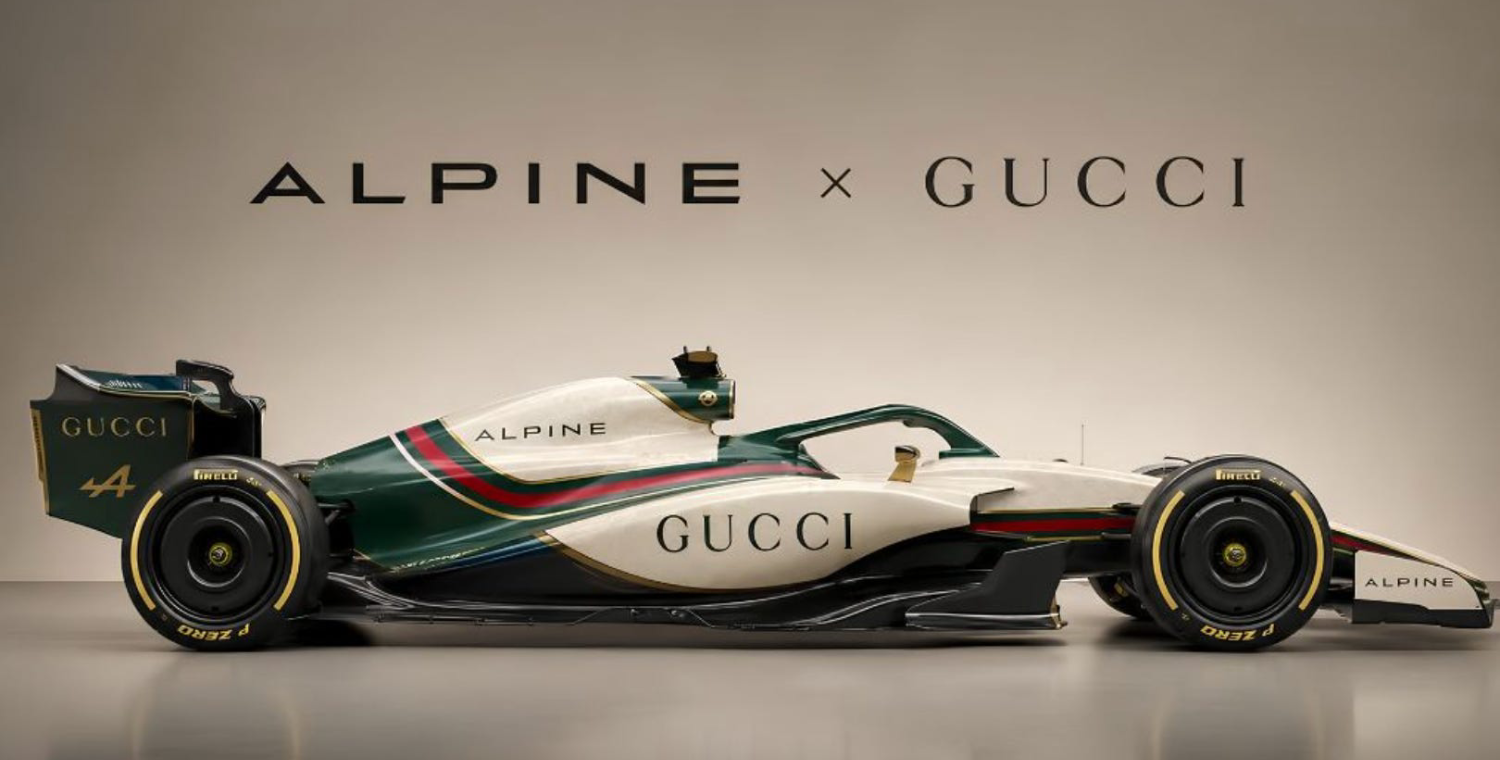
Can money buy hype? Daniel Langer makes the case for Gucci and Alpine.
Daniel Langer, CEO of Équité, is recognized as one of the “Global Top Five Luxury Key Opinion Leaders,” and advises some of the most iconic luxury brands in the world. He's also a best-selling author, global keynote speaker, and professor of luxury, strategy and pricing at both Pepperdine University and NYU, to trot.
Below, he dissects the Gucci and Alpine partnership in an op-ed that questions whether simply buying space as a title sponsor is enough to propel brands into certain space. Can companies generate genuine desire through lucrative sponsorships or are they just renting the spotlight? Langer is inclined to think the latter:

When everyone is on the grid, being on it no longer sets a brand apart. A name buys reach, and reach has quietly become the cheapest thing money can purchase in luxury. Anyone with a large enough check can stand on the same platform in front of the same audience.
What the platform cannot hand you is meaning. That you must arrive with, and you must create it through intelligent, brand-specific execution. Few brands understand that the real impact is not being seen on the stage. The work lies in doing something on the stage that proves who you are, something no rival could perform in your place.
Louis Vuitton's 10-second masterclass
Louis Vuitton’s trunk is exactly that. A craftsman with a hammer, executing a tradition older than the sport itself, at the second of victory — that is the entire brand proposition compressed into 10 seconds of global attention. Savoir-faire, the object built to outlast its owner, and the belief that victory travels in Louis Vuitton. The brand is not simply advertising during the race; it’s using the race as a canvas to demonstrate what it is.
The reason it works is that the act is true to the house. Louis Vuitton built trunks for travel before it built anything else, and it has wrapped the world’s trophies in bespoke cases for decades, from the America’s Cup to the World Cup.
The Monaco ritual did not appear overnight either. The house partnered with the Automobile Club de Monaco in 2021, presented its trophy trunk for five seasons, became an official Formula 1 partner in 2025, and only then took the title.
The meaning was built first. The amplification came later. By the time the name went on the race, there was something behind it clear enough to deserve the volume.
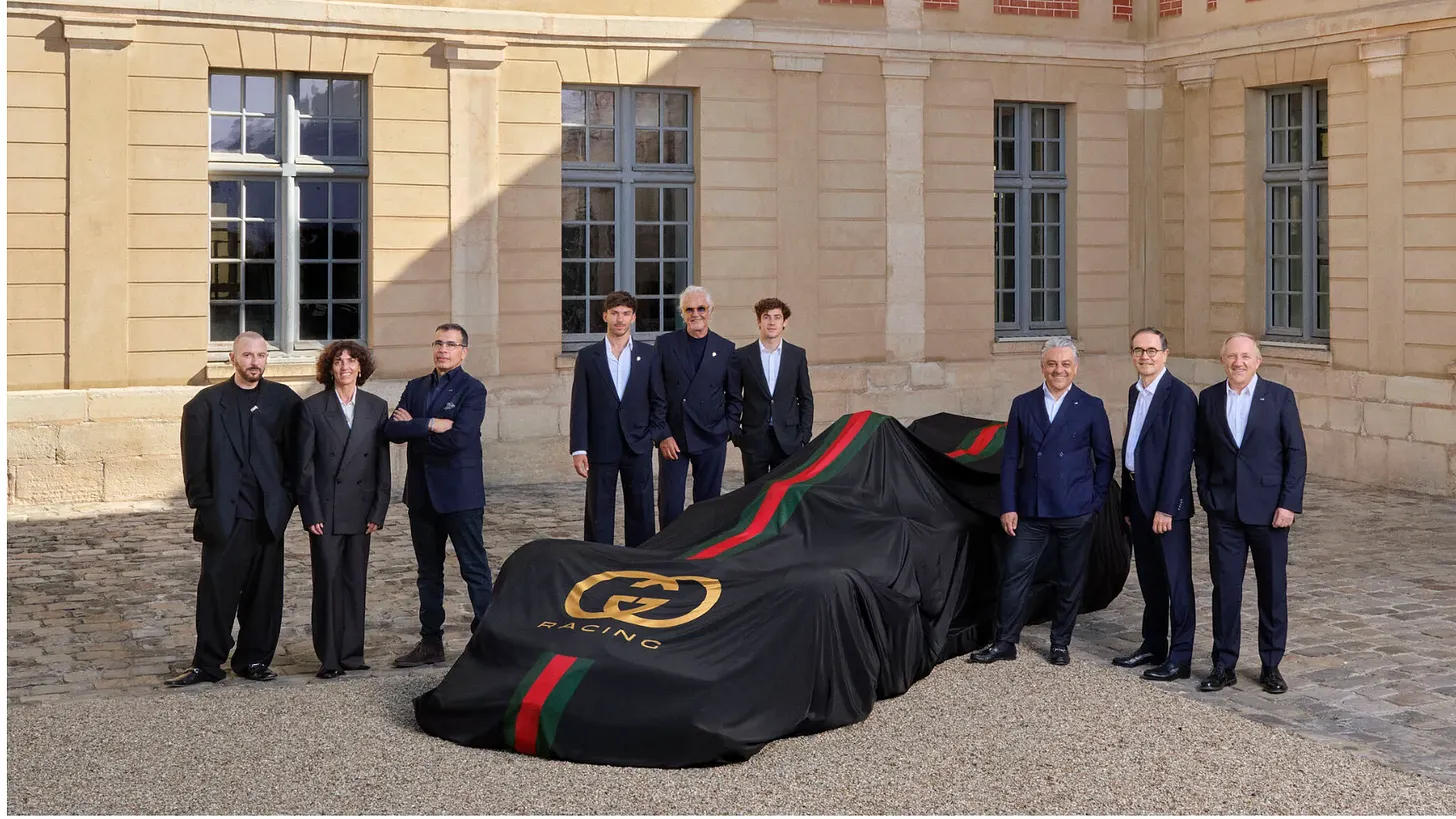
The Gucci Challenge
Now take Gucci. From 2027, the house will become title partner to Alpine, the first time a luxury fashion brand has attached its name to a Formula 1 team. The move carries the fingerprints of Luca de Meo, who built Alpine at Renault before he arrived to run Kering.
The instinct behind it makes sense at first. Formula 1 is where cultural attention now concentrates, its audience younger and more global than ever. A house in the middle of a reset is right to want a stage of that scale.
The unanswered question is the only one that decides whether the money builds desire or disappears. When the Gucci name appears, what will the brand do that proves to the world what it is, what it stands for, and that no other house could do?
A name on a sidepod is awareness, but Gucci never had an awareness problem. Awareness does not equal meaning.
Here is where the comparison turns uncomfortable. Louis Vuitton had a ritual waiting for it. The trunk was always going to belong on that podium. Gucci’s meaning lives somewhere harder to stage: in taste, in provocation, in a point of view that once polarized the room. That asset does not come with a ready-made object for a racetrack. Creating meaning is far harder than signing the deal.
The real test of a cultural partnership
This is the test I would put to any house weighing a cultural partnership. Two questions need to be answered: Does this partnership support the meaning of the brand? What can only you do in that partnership that proves who you are at the moment everyone is watching?
If the answer is that you’ll place your name and host some clients, you are renting someone else’s adrenaline. The audience will feel the difference even when it cannot name it. However, if the answer builds brand meaning and amplifies the brand’s point of view, you are building desire that compounds every season.
So, Gucci arrives at the grid in 2027 with the loudest signal in the sport and, for now, nothing yet to say through it. The signal can still be filled, but only through systematic work on meaning that no sponsorship can shortcut: a sharper point of view, a product that earns its price, and a reason to desire the brand again.
What will not fill it is the partnership itself. A name on a car begins the sentence. It does not finish it. If the meaning behind it is sharp, Formula 1 will carry Gucci further than almost anything else available. If the meaning is still hollow, the fastest cars in the world will only move the emptiness at higher speeds.
This story was first published on Jing Daily as In Formula 1, visibility can be bought. But desire must be earned. Subscribe to Jing Daily and CART's biweekly Cars and Culture newsletter here.


.webp)

.webp)