Pagani: The automaker beloved by China's billionaire set
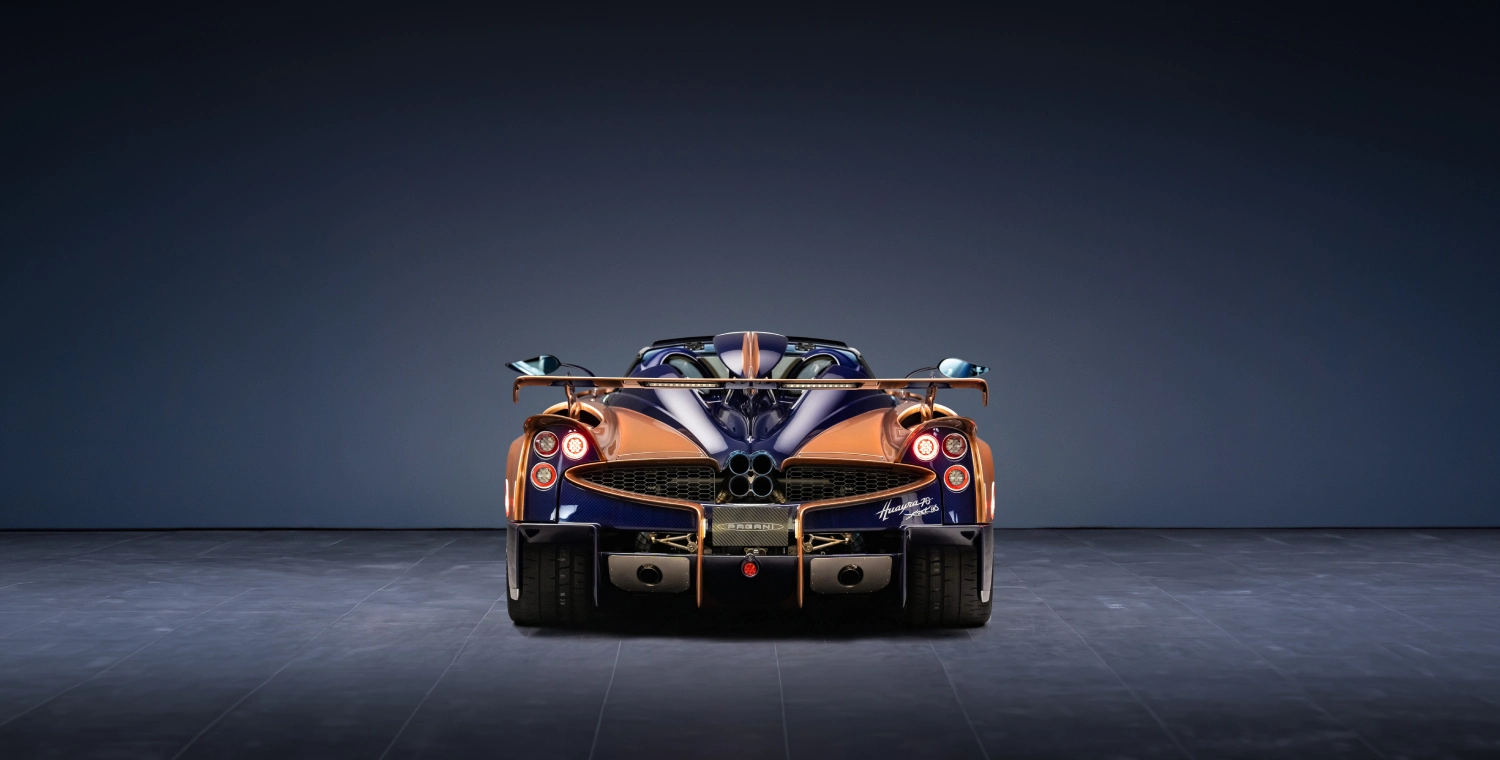
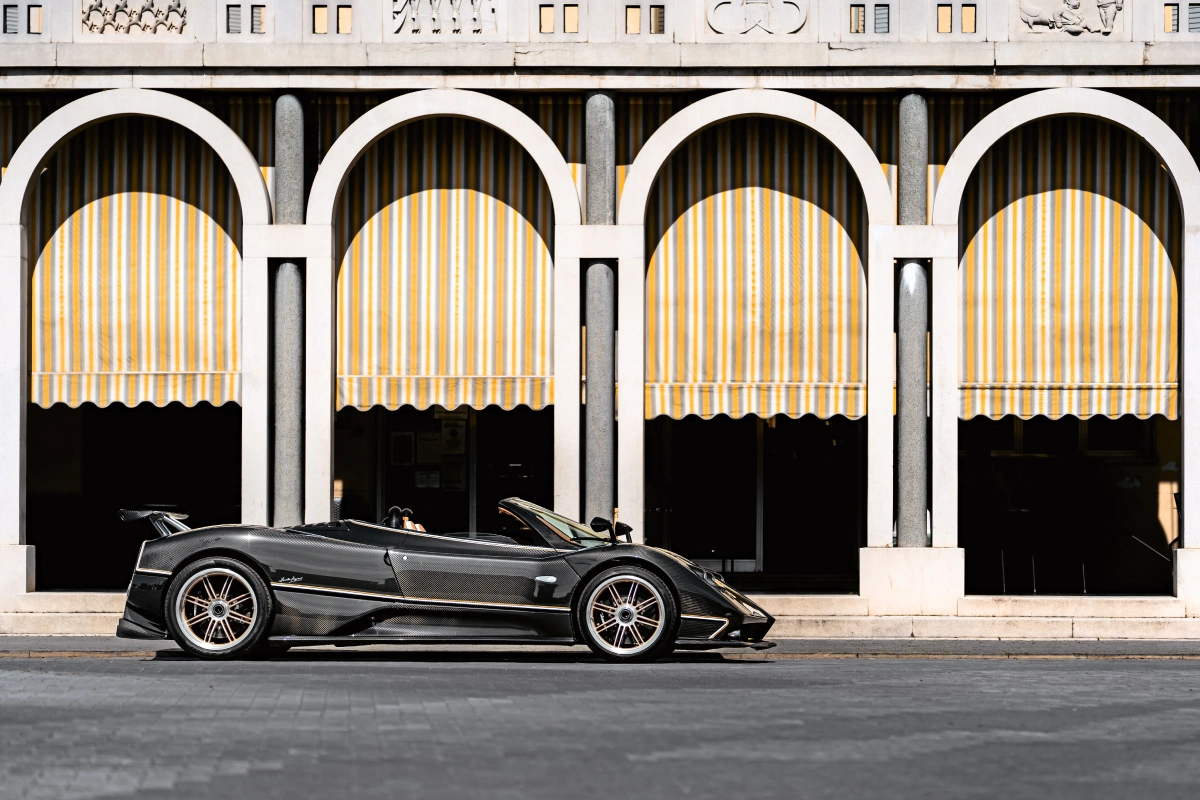
Releasing just 40 to 50 cars annually and building a devoted fan culture around its founder, the Italian brand is loved by China’s wealthiest. The art deco hypercar Utopia leaves Pagani’s Italian workshop priced at about $2.5 million. By the time it sports a Shanghai plate, China’s tax code has more than doubled that price. Despite the cost, Pagani says its Chinese buyers are the youngest anywhere. In fact, back in 2014, a 15-year-old Chinese teenager made headlines for receiving a yellow Pagani Huayra from his dad as a gift. In a market where Ferraris are frequently spotted, the extreme cost of getting a Pagani on the road is the ultimate badge of honor.
In China, fans love the brand’s supercars and their exclusivity. In a luxury market built around fan culture, they also adore founder Horacio Pagani. On Xiaohongshu (also known as Rednote), #MrPagani has 3.1 million impressions, which is high for an automotive founder.
His relationship with Chinese-American supercar collector Mike Yin is also notable. Yin’s hashtag has 3 million impressions on Xiaohongshu, while his Instagram following stands at 258,000. As Shanghai-based car enthusiast and photographer Howie Wong shares, “Most people in China know Pagani through influencer Mike Yin. He’s popular on Chinese TikTok (Douyin), and everyone knows he is very close to the founder of Pagani.”
The businessman is known to frequently meet Yin to give him supercars, with fans on Chinese social media joking that they are best friends.
In a market where the story sells the car, Pagani’s story is basically its founder. Pagani left Argentina in the early 1980s with a letter of introduction from Argentine racing driver Juan Manuel Fangio and went to work at Lamborghini, where he built the company’s first carbon-fiber car. He wanted an autoclave, but Lamborghini said no. So, he bought one himself, set up his own shop, and in 1992 founded Pagani Automobili.
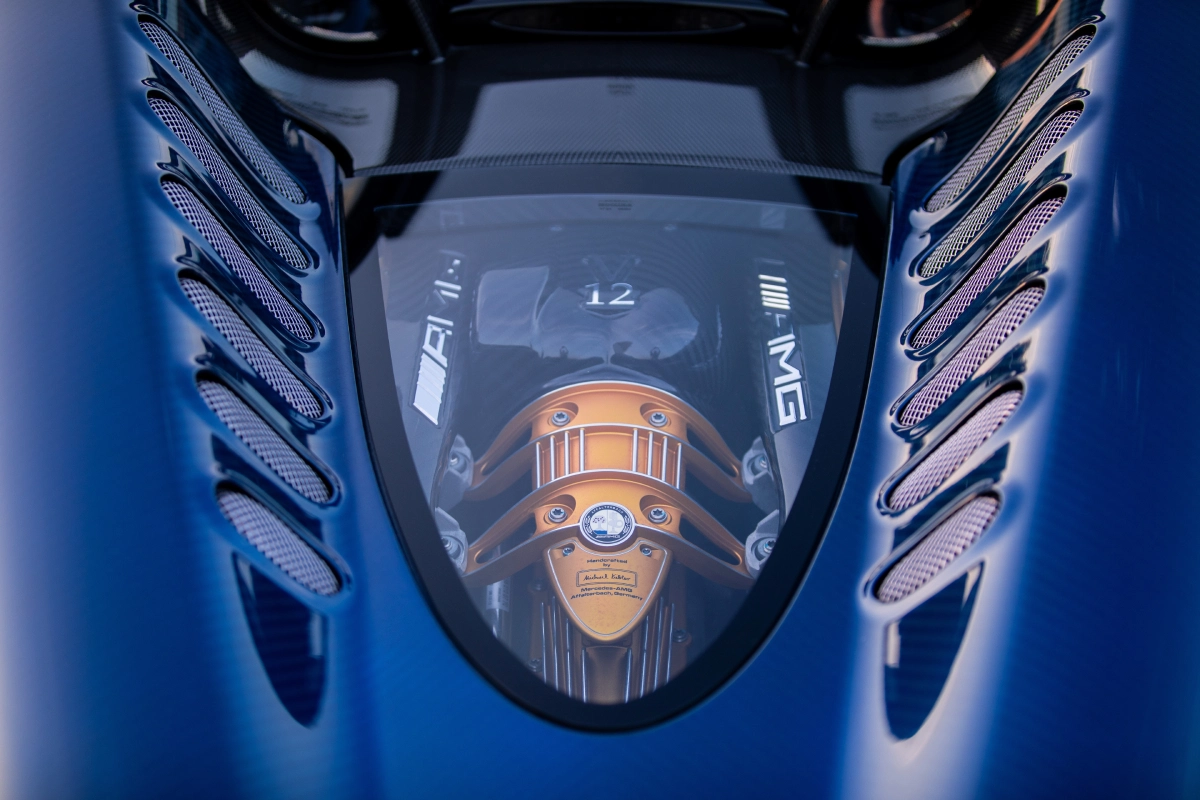
The Zonda arrived in Geneva in 1999 with a Mercedes V12 that Fangio’s phone calls had helped secure. The Huayra followed in 2011, using AMG’s 6.0-liter twin-turbo V12 — now one of the most popular models in China, with the Xiaohongshu hashtag #paganihuayra generating 22.5 million impressions. The Utopia came in 2022 with a manual gearbox, just as the rest of the industry was going the other way.
Pagani’s distribution strategy has been crucial to building interest in China, with a limited release of 40 to 50 cars a year. Carbo-titanium is laid up by hand, and screw heads are left visible because they are considered beautiful. The scarcity is as much physical as it is strategic — the brand could not flood China even if it wanted to.

For years, the only way to get a Pagani in China was to buy someone else’s. Cars came in through licensed third-party dealers and the parallel-import channel, often via Hong Kong or a free-trade-zone registration. This scarcity helped cultivate an esteemed reputation in Shanghai, Hangzhou, and Shenzhen before Pagani officially reached the market — the kind of positioning brands need to establish prior to selling in China.
Pagani soon noticed. In 2014, before the brand had a showroom in Asia, it built the Huayra Dinastia, which consisted of just three cars, all for China. That is a striking allocation for a company making fewer than 50 cars a year, especially for a market it had yet to officially enter.
The showroom followed. In October 2015, Pagani China Automotive Limited opened the brand’s first official Asian showroom on Hu Bin Road in Xintiandi, Shanghai, featuring its own carbon-fiber trim and a regional configuration system. Beijing, Shenzhen, and Chengdu arrived next.
However, an imported car with a 6.0-liter engine meets China’s tax code at its least forgiving. There is a 15% import duty, followed by a 40% consumption tax on engines above 4.0 liters — levied on a tax-inclusive base, so it takes about 67% of the duty-paid price. Then comes the 13% VAT, plus a 10% retail tax on super-luxury vehicles, introduced in December 2016 and tightened in 2025, when the threshold dropped from RMB 1.3 million ($193,476) to RMB 900,000 ($133,945).
Stack those taxes together, and the multiplier lands near 2.2 before the retail levy. A car that leaves Modena at roughly RMB 17 million ($2.5 million) arrives in China at about RMB 40 million ($5.9 million) landed. Specified the way most Pagani buyers specify, it can easily exceed RMB 45 million (nearly $6 million). Most of what the collector pays never reaches Modena; it goes to Beijing.
Pagani sells its cars on a phrase borrowed from Leonardo da Vinci: art and science, together. That framing travels better in China than Bugatti’s record-chasing does, because it lands squarely on craftsmanship, the hand, and exceptionally limited small-batch production.
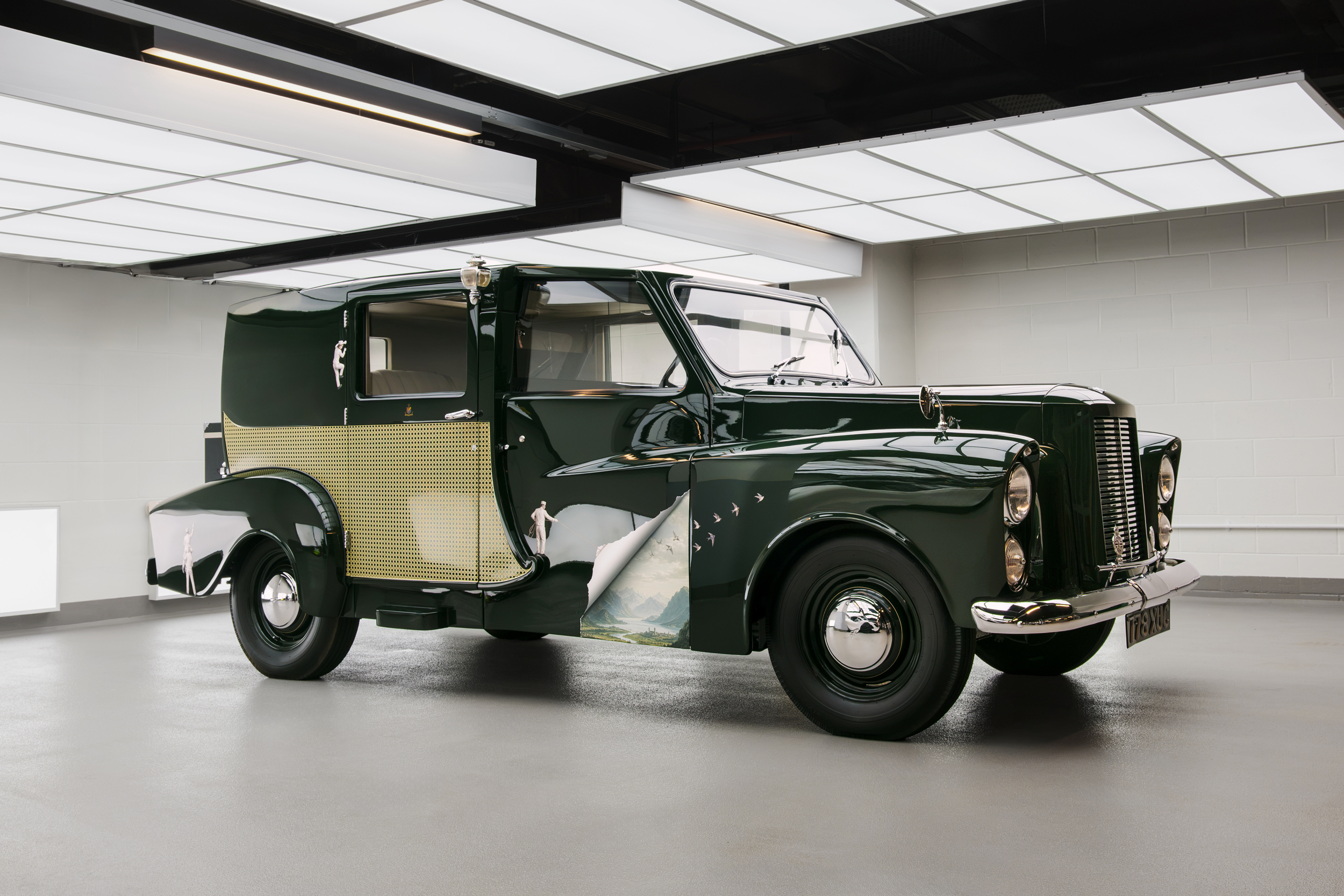
The clearest evidence came in 2024. From March 4 to April 14, the Shanghai Museum staged “The Shape of Air: from Leonardo da Vinci to Pagani Utopia.” A Utopia stood in the galleries with a dragon painted on its carbon hood by artist Yan Xiaojun, inspired by Song dynasty work, alongside a Zonda Cinque. To promote the exhibition and demonstrate its commitment to the Chinese market, founder Pagani even lectured at Tongji University for Italian Design Day.
Few car companies are invited into a national museum, and fewer still have a founder so popular that he is asked to lecture at a university.
Though, like all luxury supercar brands, Pagani’s audience is far larger than its customer list. On Xiaohongshu, #pagani has 168.5 million impressions, while a 2025 collaboration with Bvlgari further illustrates the market’s appetite for high-fashion cars.
Designed specifically for a Thai collector, a one-off $6 million Imola Roadster was produced last year in partnership with the Italian jewelry house, becoming one of Pagani’s most customized and artistically opulent vehicles in existence. Covered in crystal accents, it features a gear stick encrusted with diamonds and emeralds, along with an exterior snake-scale paint job. It instantly resonated with the East Asian car scene, particularly with Chinese netizens who are known for sharing loud and lavish custom cars.
The buyers are a much smaller group. Hurun counts roughly 130,000 Chinese households holding at least RMB 100 million ($14.8 million). Its 2024 survey found that wealthy Chinese households are willing to spend an average of RMB 780,000 ($116,086) on a car; a Pagani car costs around 50 times that. And that is exactly part of the appeal for China’s exhibitionist billionaires: a way to parade their success.
This article was originally published on Jing Daily as "Why Pagani is made for Chinese Billionaires."

.webp)