DRIVE TIME for CART: Clocking Speed
The author of bestselling automotive-horology book ‘Drive Time’ and our foremost authority on all things cars and watches-related, Aaron Sigmond, writes about what is arguably one of the most iconic Rolexes of all time — the Cosmograph Daytona.
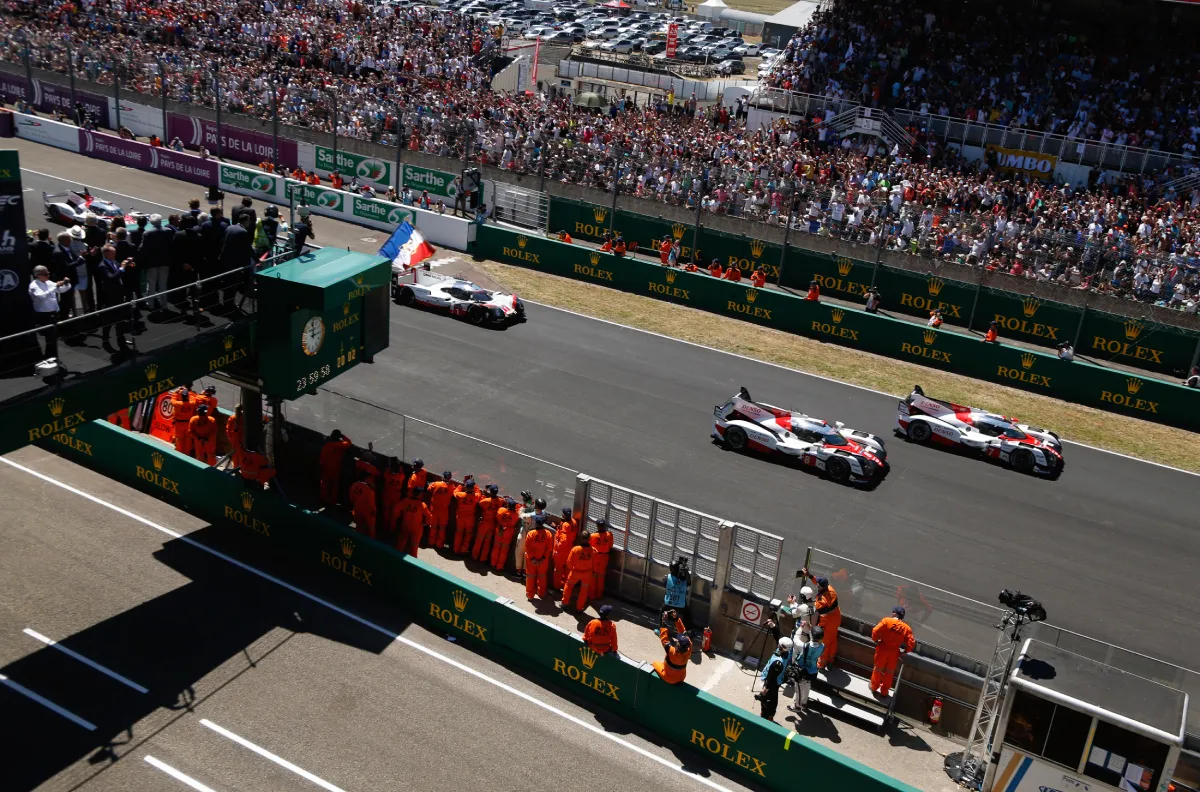
A well-worn aphorism, most often attributed to Henry Ford, proclaims that “auto racing began five minutes after the second car was built.” Whether the sentiment was indeed Ford’s is beside the point. It endures because the spirit it captures is so fundamentally true: Almost as soon as the automobile appeared, someone decided to find out whose was faster.
Organized motor racing emerged in the mid-1890s, and chronograph [pocket] watches were there almost from the beginning. For well over a century, the relationship between high-performance automobiles and precision mechanical timekeeping has been one of luxury’s most enduring partnerships.
To call it symbiotic might be overstating it — but only just. So before Paul Newman made the Rolex Daytona immortal, Steve McQueen turned the TAG Heuer Monaco into a cinematic icon in Le Mans, Michael Schumacher became synonymous with Omega, Lewis Hamilton collaborated with IWC Schaffhausen or Ferrari and Richard Mille produced the astonishing RM UP-01 Ultraflat, racing and watches had already spent generations measuring victory in fractions of a second.
The modern landscape of automotive-inspired watches extends far beyond celebrity ambassadors and sponsorship agreements. It encompasses purpose-built racing chronographs, dashboard-inspired dials, tachymeter bezels, innovative materials borrowed from Formula 1 (only fair, given that cars borrowed the clutch from watches — yep), collaborations between the world’s leading watchmakers and automotive manufacturers, and designs that capture the aesthetic — and increasingly the engineering — of the world’s most celebrated sports cars.
My own exploration of this fascinating intersection began almost two decades ago — August 2007, to be precise — with “Carmakers & Watchmakers,” a recurring column for AUTOWEEK. That evolved into four editions of the book DRIVE TIME: Watches Inspired by Automobiles. Motorcycles, and Racing, a comprehensive survey of one of horology’s most compelling categories. Now that journey continues.
“DRIVE TIME for CART” is the next chapter in this saga: a regular column devoted exclusively to automotive- and motorsport-inspired watches. Here you’ll find the latest releases, limited editions, collaborations, industry news, historical perspectives, interviews, design analysis and the stories behind the timepieces that continue to prove there are few pairings more natural, or more enduring, than great cars and great watches.
After all, horsepower and sheer competitive determination win races. But someone still has to measure the time.
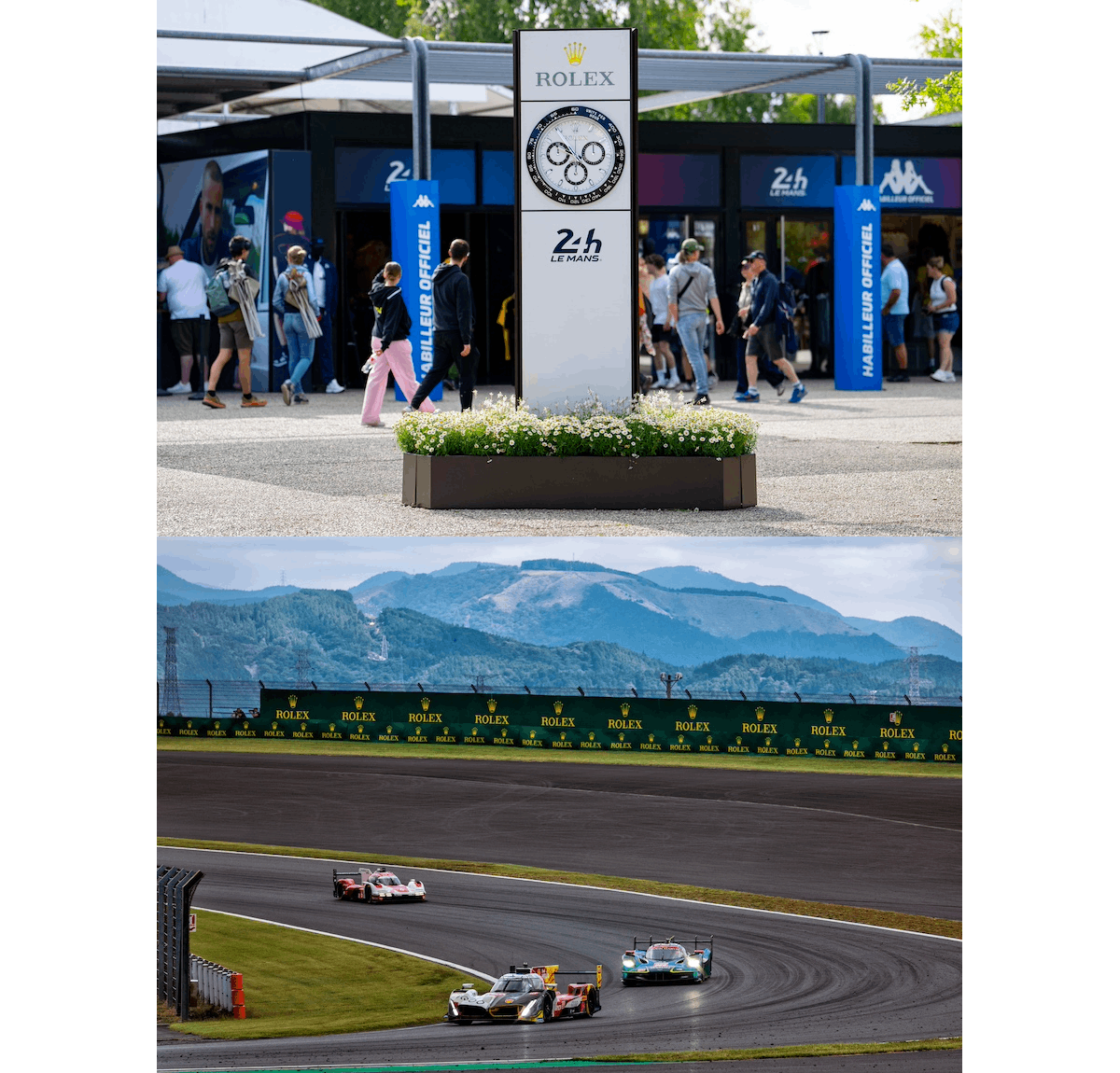
It should therefore come as little surprise that the inaugural timepiece featured is one of the 12 DRIVE TIME ICONS: the Rolex Cosmograph Daytona — quite simply the most famous chronograph ever created.
There are unauthorized waiting lists at authorized dealers for contemporary Daytonas, while vintage examples routinely command six, seven and even eight figures at auction. Among automotive-inspired wristwatches, the Rolex Cosmograph Daytona stands peerless — the benchmark against which every racing chronograph is inevitably measured. For more than half a century, it has been the watch of choice for collectors, racing enthusiasts and all who appreciate timeless design.
Named after the famed Daytona International Speedway — home to the endurance race now known as the Rolex 24 at Daytona — the watch enjoys an almost legendary automotive counterpart in the Ferrari Daytona of Miami Vice fame. Yet perhaps no association has done more to cement its legend that that with the late Academy Award–winning actor, race driver and philanthropist Paul Newman.
Beginning in 1972, when Newman first took up competitive motor racing, his wife, Joanna Woodward (an Oscar winner herself), gave him a succession of Rolex Daytona chronographs that he wore until his death in 2008. The first was fitted with what Rolex collectors came to call the “exotic” dial — distinguished most obviously by its contrasting subdials. Over time, that dial became known simply as the Paul Newman.
Purists will happily spend an afternoon explaining that a “true” Paul Newman Daytona refers only to a handful of manually wound references fitted with that exotic dial. They are not entirely wrong. Nor are they especially brief.
Ultimately, watch, race and man became inseparable. That extraordinary convergence of design, motorsport and popular culture helped the Rolex Daytona earn, and retain, its status as the world’s most celebrated racing chronograph.
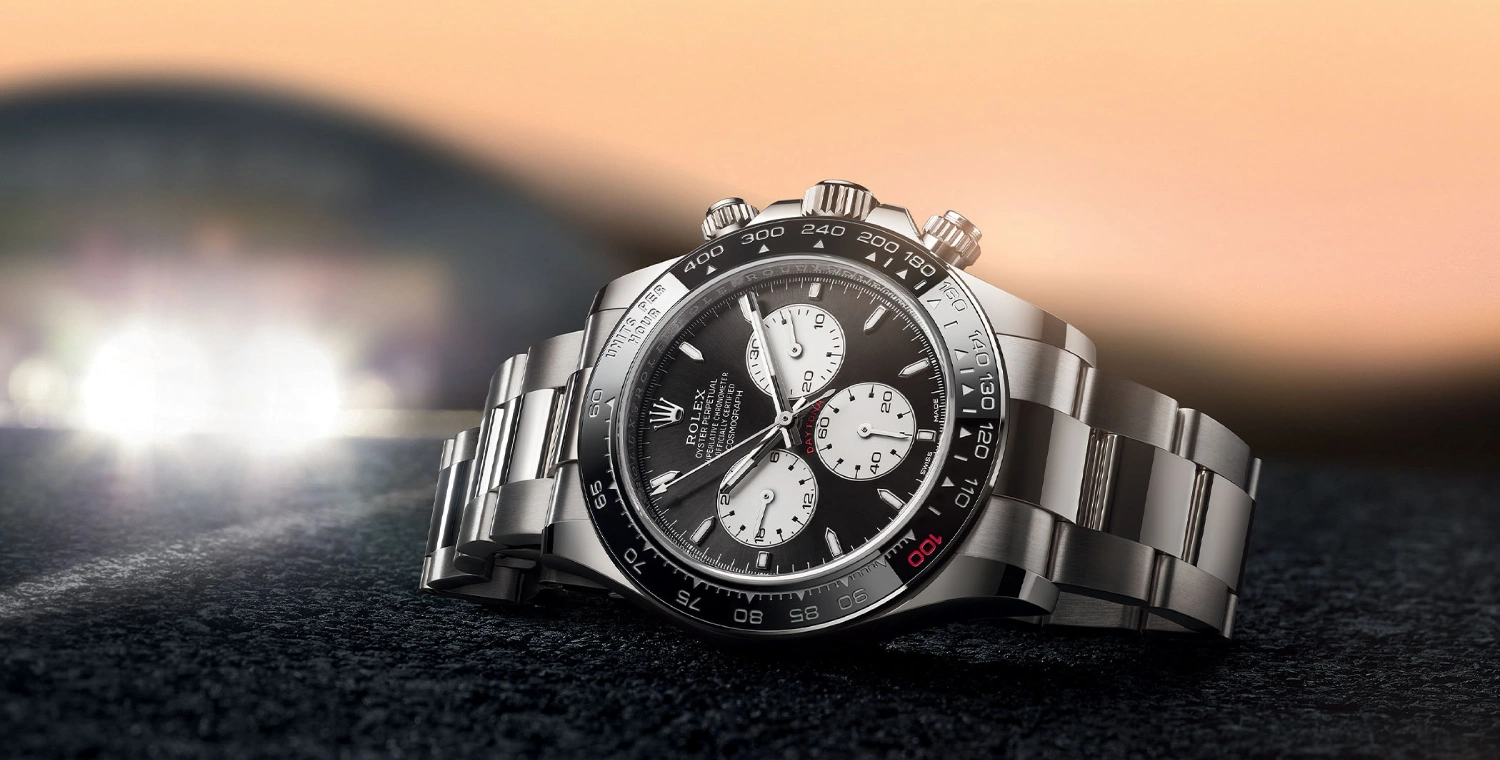
Which brings us to the watch featured here: the Rolex Cosmograph Daytona “Le Mans” (Ref. 126529LN), introduced in 2023 to commemorate the centenary of the 24 Hours of Le Mans. Crafted in 18k white gold, it pairs a Paul Newman–inspired dial with a black Cerachrom bezel distinguished by its red “100” tachymeter marker — replacing the customary “120” — a subtle yet meaningful tribute to the race’s hundredth anniversary.
Already regarded as one of the most significant Daytona references of the modern, post–Zenith El Primero era, “Le Mans” is powered by the Rolex Calibre 4132 — an automatic chronograph movement developed exclusively for this model. It is precisely the sort of timepiece where motorsport history and horological history converge.
Which, after all, is exactly what “DRIVE TIME for CART” is all about.
Images: Rolex

.webp)

.webp)