Gary Card Built Frank Ocean a Car You Could Never Drive
Cars occupy an unusually large amount of space in Frank Ocean’s visual world. They appear in lyrics, photographs and music videos with the regularity of recurring characters: BMWs, Ferraris, McLarens, Japanese imports and anonymous machines glimpsed through windows or parked at the edge of a frame. They are rarely there simply to signify wealth. More often, Ocean treats the automobile as a container for memory and desire, an object onto which ideas of freedom, adolescence, masculinity and escape can be projected. That makes the cars Gary Card created for Boys Don’t Cry among the more revealing automotive objects associated with Ocean, despite the fact that none of them could ever be driven.
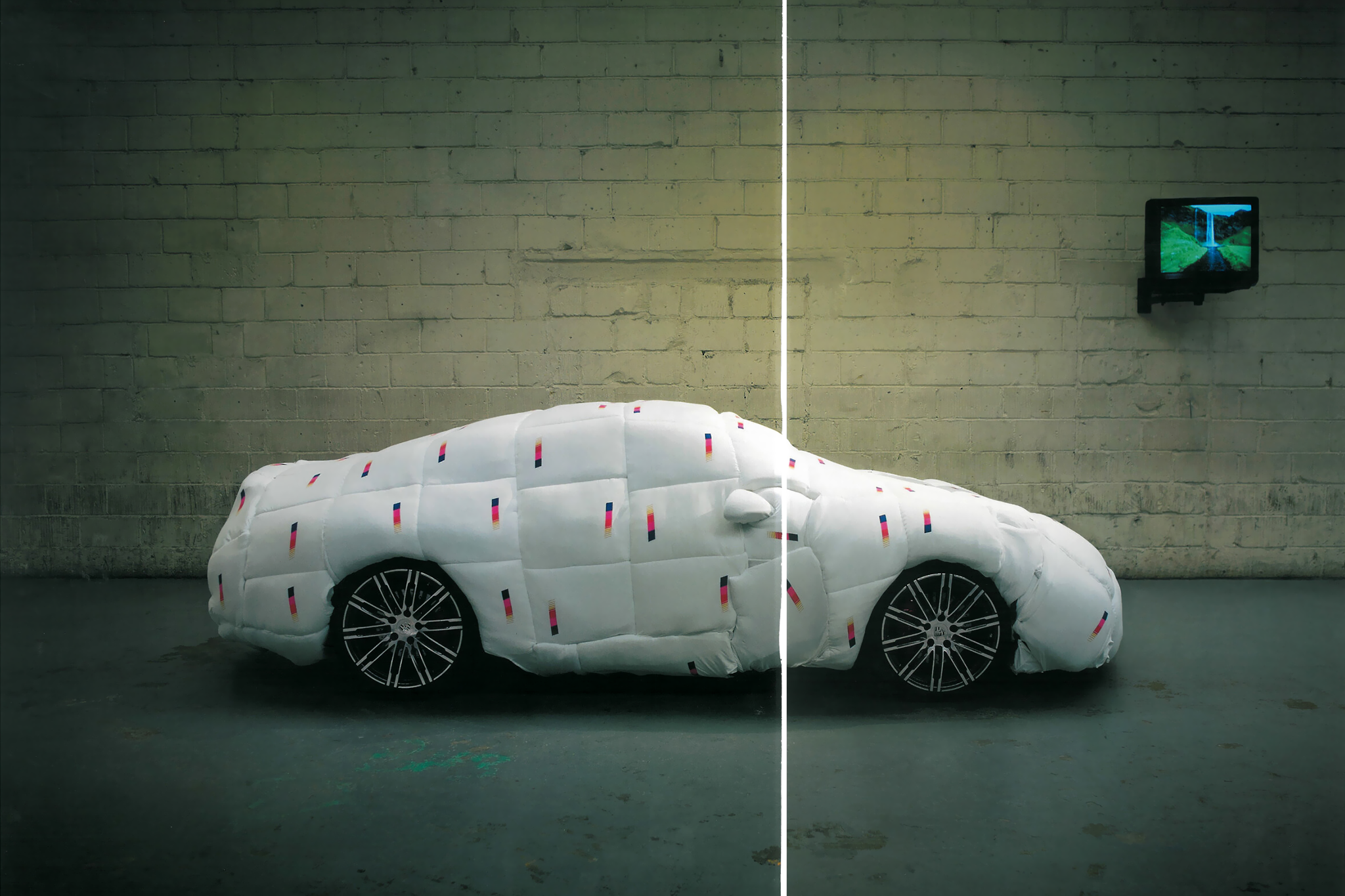
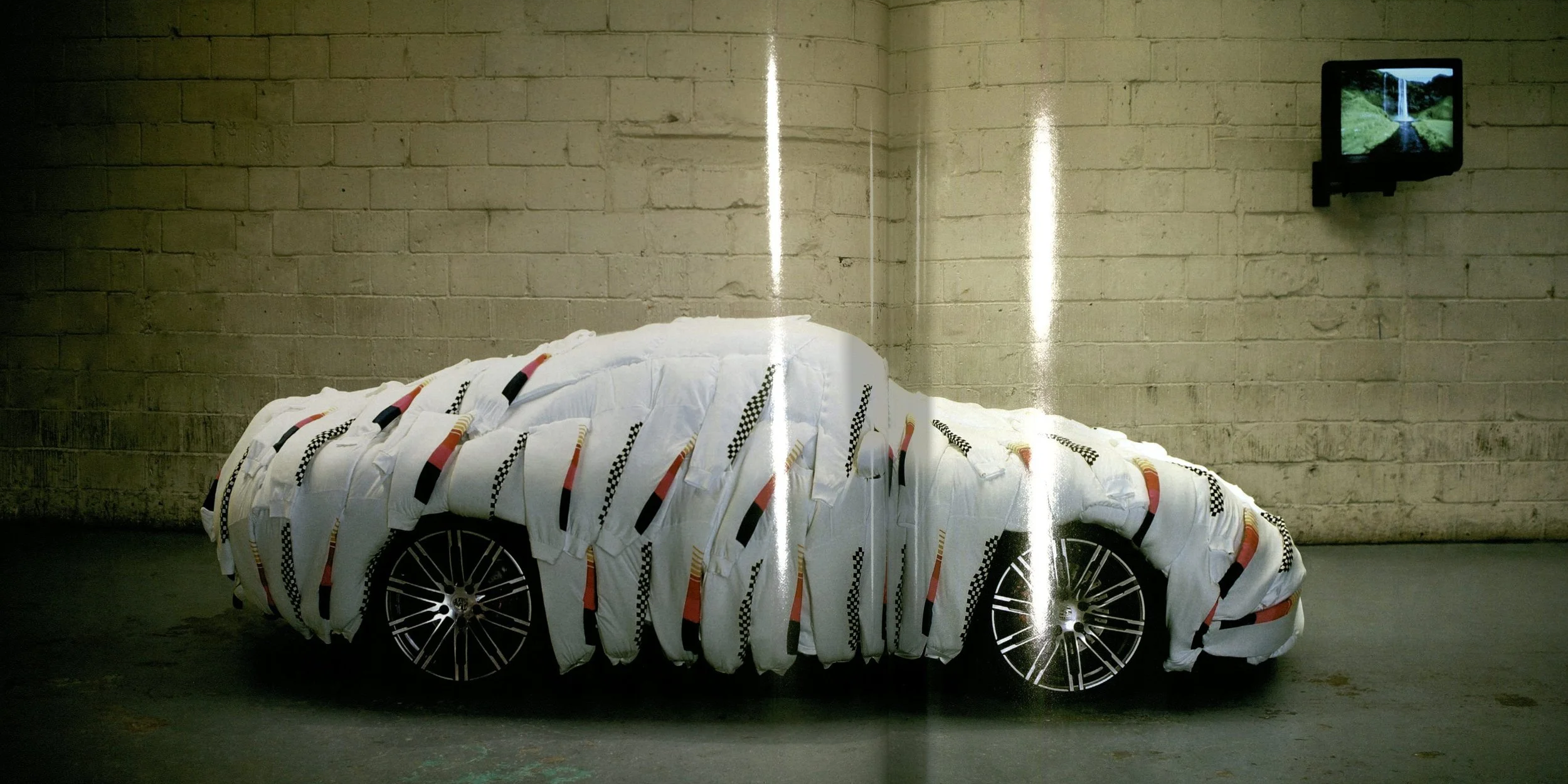
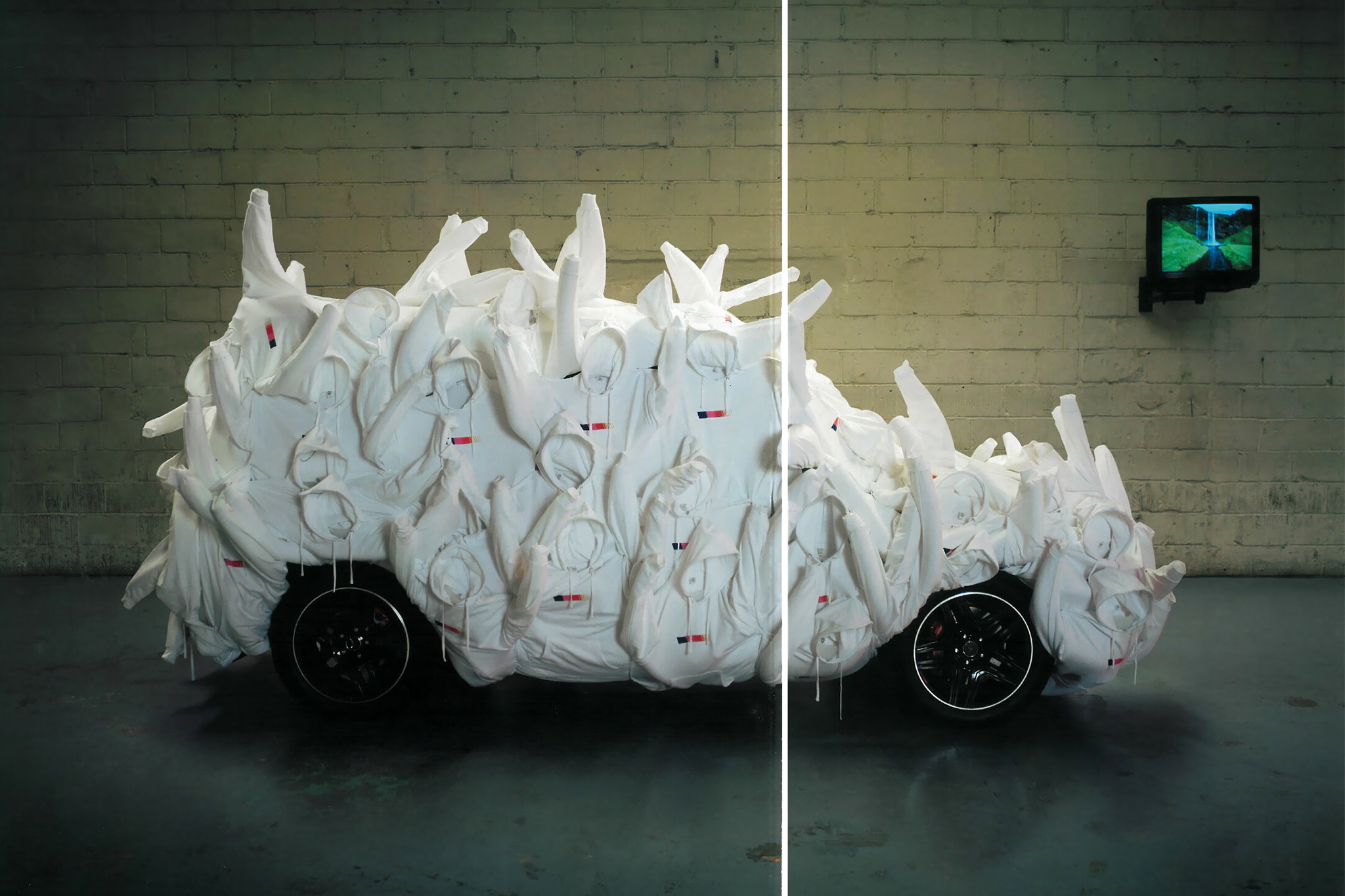
The British artist and set designer built three full-scale car sculptures for “Television Waterfall,” a 10-page story photographed by Ocean in London and published in the magazine that accompanied Blonde in August 2016. Their silhouettes borrow the low, aggressive proportions of sports cars, but almost everything normally associated with automotive design has been removed. There is no polished bodywork, mechanical precision or fetishized engineering. Instead, Card fashioned their surfaces from white hoodies, sweatshirts and T-shirts, stretching and layering the garments across skeletal forms until fabric began to approximate sheet metal.
The construction is intentionally unresolved. Sleeves remain visible. Seams interrupt the contours of the body. Printed graphics and checkered patterns surface in unexpected places, reminding the viewer that what initially reads as an automobile is, on closer inspection, an assemblage of ordinary clothing. Card was not attempting to reproduce a recognizable marque or model. He retained just enough of the car’s visual grammar for the objects to register immediately: the compressed roofline, exaggerated wheel arches, long hood and planted stance.
That ambiguity gives the sculptures much of their force. Automotive culture depends heavily on exactitude. Enthusiasts learn to identify a model from the shape of a headlight or the angle of a rear quarter panel, while manufacturers spend enormous resources refining surfaces by fractions of a millimeter. Card works in the opposite direction, reducing the automobile to something closer to an impression. His cars resemble the way one might recall a vehicle seen years ago, with certain proportions remaining vivid while the technical details have dissolved.
Ocean’s photographs extend that sense of unreality. The sculptures sit within an austere industrial environment, their pale fabric bodies absorbing rather than reflecting the light around them. A CRT television displaying a waterfall appears beside the cars, lending the series its title and introducing another kind of image-making device into the scene. In one photograph, a figure wearing an early Oculus Rift headset sits inside one of Card’s constructions. Physical sculpture, digital simulation, clothing and photography begin to overlap, each offering a different version of an object that is already an imitation.
Seen now, that combination feels particularly prescient. The automobile has always existed simultaneously as a functional object and an image, but increasingly its cultural life takes place through screens, renderings, configurators, video games and social media. Card’s sculptures seem to acknowledge this separation between the actual car and the idea of one. Remove the drivetrain, the badge and the body panels, and a surprisingly small amount of information is required for the mind to fill in the rest.
Card has said that Ocean commissioned the works roughly two years before Boys Don’t Cry appeared, placing their creation around 2014. The timeline is worth noting because it situates “Television Waterfall” within the prolonged gestation of the Blonde period rather than treating it as an elaborate editorial prop conceived for the magazine’s release. Ocean was assembling a visual vocabulary in parallel with the music, and automobiles repeatedly became a means of thinking through the themes that preoccupied him.
Within that larger context, Card’s sculptures offer a particularly elegant inversion. Cars are commonly presented as some of the hardest and most technologically sophisticated consumer objects we encounter. Card renders them soft, vulnerable and conspicuously handmade. The transformation does not diminish their presence. If anything, it makes their symbolic role more visible. Once stripped of their mechanical purpose, they become pure surfaces for projection.
A decade after Boys Don’t Cry, the images remain compelling because they resist the familiar tendencies of both fashion photography and automotive photography. There is no attempt to sell the garments, nor is there much interest in celebrating the performance or pedigree of a particular vehicle. Card and Ocean instead isolate the emotional architecture of car culture: the silhouette that stays with you, the machine remembered from childhood, the object desired long before one understands what sits beneath its hood.
In “Television Waterfall,” the car ultimately matters less as transportation than as an image we carry around with us. Card simply gave that image a body.

.webp)

.webp)